Not All Worm Castings Are Created Equal
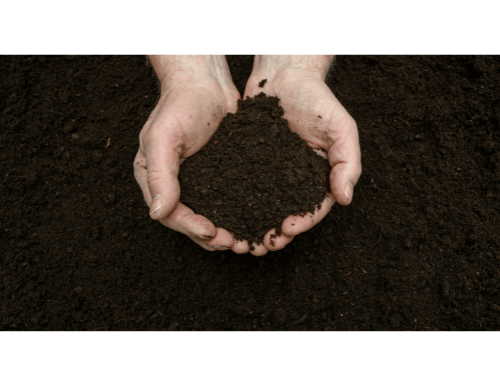
If you already know about worm castings, you probably know why people seek them out.
It isn't really about the nutrients — it's about the microorganisms. The bacteria, fungi, nematodes, and biological activity that make worm castings behave differently in your soil than any synthetic amendment ever could.
You're working with a living product.
Plants don't have a digestive tract. They can't absorb nutrients in just any form.
Nitrogen, phosphorus, potassium, calcium — all of these have to be converted into specific plant-available forms before a root can take them in. That conversion is the job of soil microbes. Without a thriving microbial community working in your soil, nutrients can sit inches from a root system and remain completely inaccessible to the plant.
Worm castings seed your soil with that microbial workforce.
Which means the question worth asking isn't just whether you have worm castings in your hand — it's whether the biology inside them is still alive and working.
Three things determine the answer: what the worms were fed, how long the material was worked through the bin, and how it was stored before it reached you.
What Soil Microbes Actually Do
Soil microbes work in distinct functional groups, each doing something the others can't replace.
Nitrogen-fixing bacteria pull atmospheric nitrogen into forms plants can use. Phosphate-solubilizing bacteria and fungi break phosphorus free from soil particles, where it would otherwise stay locked away from roots. Arbuscular mycorrhizal fungi extend root systems far beyond what a plant could reach on its own — their thread-like hyphae penetrate soil pores too small for root hairs, accessing water and nutrients across a dramatically larger volume of soil. Nematodes regulate bacterial and fungal populations, cycling nutrients as they feed.
The more species present and active, the more completely those functions are covered.
(Source: https://pmc.ncbi.nlm.nih.gov/articles/PMC10748132/ | https://link.springer.com/article/10.1007/s44378-025-00037-4 | https://pmc.ncbi.nlm.nih.gov/articles/PMC8280758/)
A 2022 study published in Ecosphere found that crop yields under low-nutrient conditions were directly predicted by the initial microbial diversity in the soil — a richer starting community translated to measurably better plant performance even without added fertilizer.
A separate PMC study confirmed that higher microbial diversity promoted more complete decomposition of organic matter, strengthening the nutrient cycling that plant roots depend on.
(Source: https://esajournals.onlinelibrary.wiley.com/doi/10.1002/ecs2.4029 | https://pmc.ncbi.nlm.nih.gov/articles/PMC5930326/)
Worm castings are one of the most effective ways to introduce that community to your soil.
Research has shown that microbial activity in finished worm castings is 10 to 20 times higher than in the soil and organic matter the worm originally ingested. But what that community looks like — how diverse, how functional, how alive — depends entirely on what happened before those castings reached you.
(Source: https://springerplus.springeropen.com/articles/10.1186/2193-1801-1-26)
The First Variable: What the Worms Were Fed
A worm produces castings by processing organic matter through its digestive system. What comes out is only as rich — and only as diverse — as what went in.
Worms fed a wide variety of food scraps, shredded paper products, and natural organic material produce castings with a broader, more complex microbial community than worms fed a single uniform input.
Research published in Scientific Reports found that the starting substrate of a vermicomposting system directly shapes the diversity and functional capacity of the microbial community in the finished castings. Systems beginning with a single homogenous input produced a less diverse microbiome than systems starting with mixed-input material.
A separate study comparing three feedstocks of different combinations found different quality outcomes from each of them. The starting material affects the finished product.
Single-input or formulated diets — ground grain, expired flour, standardized worm chow — produce consistent, predictable results. That consistency is genuinely useful when the primary goal is producing a steady supply of healthy bait worms.
But a narrow diet produces a narrower microbial range in the finished castings. A narrower microbial community is less capable of covering the full spectrum of soil health functions that make castings valuable in the first place.
A review of vermicomposting microbiology in ScienceDirect confirmed that both the quality of the initial substrate and the earthworm species used influence the microbial community in the finished product — and that this directly influences the nutrient dynamics of the castings once applied.
The Second Variable: How Long the Material Was Worked
Worm castings are done when they're done — not when a bin has enough bait-sized worms to harvest, and not on a fixed production schedule.
The material is ready when the worms have worked it long enough that every particle has passed through the digestive process. The color should be as dark as fresh-brewed espresso grounds. The texture should be fine and almost soft, uniform throughout, with no recognizable original material remaining. The worms themselves will signal completion by moving toward any remaining food source — a sign the bin has been largely worked through.
Research published in Scientific Reports confirmed that bacterial diversity — both taxonomic and phylogenetic — peaks in fully mature vermicompost, not at early or intermediate stages. Diversity builds over time. Material harvested before that point simply hasn't had time to develop the same biological complexity.
Pure Castings vs. Bait Bedding
Many local ads listing castings for sale come from bait farmers. The castings they're selling come from bins that raised their bait worms. Worms have occupied those bins, and the material has genuine biological value.
But it's worth understanding what you're actually looking at.
Peat moss is the standard bedding for bait operations. It is formed in nutrient-poor bog conditions — research published in PNAS confirms that Sphagnum peat litter is poor in nutrients and contains compounds that actively inhibit microbial breakdown. The USDA ecological site database similarly documents that peat bog soil is inherently low in available mineral plant nutrients.
Peat is a structural material. It holds moisture and provides a loose medium for worms to move through. Once worms have been living in it alongside food inputs, it can carry a microbial load from that activity. How much depends on how long the worms were in it, what they were fed alongside the peat, and how fully the material was worked.
(Source: https://www.pnas.org/doi/10.1073/pnas.0606629104 | https://edit.jornada.nmsu.edu/catalogs/esd/094D/F094DY001WI)
Bait bedding is not a bad product.
For buyers who want an affordable, castings-amended peat moss with some added biology, it is a useful product and is usually sold at a good price. It sits somewhere between raw peat and pure castings — the worms have improved it, but it isn't fully worked through.
The distinction worth understanding isn't a judgment about the seller. It's a functional difference that changes what to expect and how best to use it.
Diversity builds over time in the bin. The castings harvested when the worms are done — not when the bait order needs filling — carry a community the early-harvested material simply hasn't had time to develop.
The Third Variable: Storage After Harvest
Even fully finished, biologically rich castings can lose significant potency if stored poorly.
The microbial community needs moisture, moderate temperature, and airflow to stay alive. Dry them out, seal them in plastic, or expose them to temperature extremes, and the biology degrades — in some cases, dramatically.
A peer-reviewed study published in Soil Biology and Biochemistry specifically tracked enzyme activity and microbial biomass in aging vermicompost. It found consistent, measurable decreases over time. Three of four enzymes analyzed showed declining numbers. Microbial biomass dropped in parallel.
The research identified two stages of biological decline: first, a drop in microbial populations that reduces the synthesis of new enzymes; then, degradation of the existing enzymes already present in the material. Both the living community and the biological infrastructure it built are compromised as castings age.
Ohio State University Extension notes that soil microbial populations are highly sensitive to temperature, going largely dormant outside a moderate range and dying off under prolonged heat or freezing stress.
Research published in the journal SOIL confirmed that storage conditions — particularly drying and temperature fluctuation — suppress enzyme activity and can cause microbial populations to go dormant or die off entirely.
(Source: https://ohioline.osu.edu/factsheet/SAG-16 | https://soil.copernicus.org/articles/11/247/2025/)
A Note on Dried and Rehydrated Castings
A question that comes up in worm farming discussions: Does drying and rehydrating castings restore their biological value?
Some producers claim their dried castings test equivalently to fresh ones after rehydration, pointing to fungal counts as evidence. The research tells a more nuanced story.
Some microorganisms — particularly hardy spore-forming bacteria and certain fungi — can survive desiccation and revive upon rehydration. Drying filters the community down to its most stress-tolerant members. Drying favors the hardiest survivors. The more sensitive species don't come back the same way."
What bounces back after rehydration is a narrower, less diverse community than what existed before drying — even if isolated counts look similar for specific species. The diversity of the community, which is the primary driver of soil health outcomes, is not restored by rehydration.
A USDA-funded storage study found that microbial counts held reasonably stable under controlled lab storage conditions. The important distinction: carefully controlled lab storage is not what most bagged castings experience in a warehouse or on a retail shelf.
How to Evaluate What You're Buying
The sensory indicators of quality castings are consistent across research and experienced producers.
Color should be very dark — close to espresso or fresh-brewed coffee grounds. Lighter brown or tan suggests incomplete processing or a .
Texture should be fine, uniform, and almost soft — not chunky, gritty, or variable in particle size.
Smell should be clean and earthy, like forest soil after rain. Sour, ammonia, or musty odors point to anaerobic conditions or incomplete processing.
Moisture should feel like a wrung-out sponge — damp but not wet. Bone-dry castings have already experienced the desiccation that compromises microbial populations.
If you're buying from a local producer, ask two questions: how recently was this harvested, and how has it been stored since? Those answers tell you most of what you need to know.
If you have access to a microscope, finished castings are visually remarkable. The density and diversity of biological activity is visible and unmistakable — and it makes the difference between active and depleted castings immediately apparent in a way no description fully captures.
Our Approach at Restoring Roots
We're a small homestead in Hickman County, Tennessee.
We've been producing worm castings for our own use for years and have reached the point where we're producing enough to offer them for sale in limited quantities. We believe worm castings are one of the most important tools in regenerative agriculture. Expanding this side of our homestead is a goal we're actively building toward.
Our bins are fed a wide variety of food scraps from our kitchen and from local community sources, organic material from our chicken coops and forest floor, and shredded paper products that would otherwise go to waste.
It's a closed loop — what comes in as scraps leaves as something genuinely valuable for the soil.
We harvest when the material is done. Espresso dark, soft, uniform, clean-smelling. We watch the color, feel the texture, and wait for the worms to signal they've finished.
We sell pure castings. Down the road, we plan to offer blended potting mixes as well. When we do, we'll be transparent about every component.
If you have questions about casting quality, what to look for, or how to evaluate what you're buying from any source, we're happy to talk through it. Contact us