I know. Stay with me.
When I tell people I sell worm castings, I get one of two reactions. Either their eyes light up because they already know, or they stare at me like I've lost my mind. By the time you're done reading, you're going to look at your garden very differently no matter which group you're in.
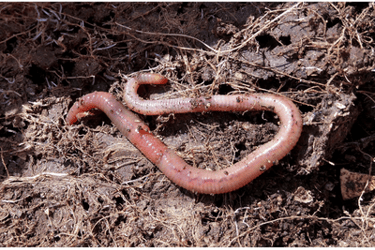
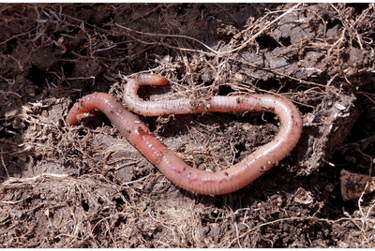
Worm castings are, in the simplest possible terms, worm manure. Earthworms eat organic matter — kitchen scraps, decomposing plant material, leaf litter — and what comes out the other end is one of the most concentrated, biologically rich soil amendments you can put on your garden. God designed this system from the very beginning. It has been quietly improving soil since the Garden of Eden. We are just finally paying attention.
This isn't a trendy gardening gimmick. The research behind worm castings goes back decades, spans hundreds of peer-reviewed studies, and arrives at the same remarkable conclusions.
I'm going to walk you through all of it, and by the end you'll understand why organic growers have been quietly using this stuff for years while the rest of us were buying bags of synthetic fertilizer.
I'm often asked if worm castings are the same thing as compost, so I'd like to take a moment to explain the difference.
Worm Castings: What They Do, Why They Work, & How to Use Them
The research is deep, the results are remarkable, and it all starts with something that looks like dark coffee grounds.
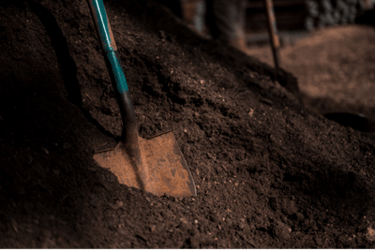
Worm castings (vermicompost) are one of the most powerful ways to improve soil, boost plant growth, and grow more nutrient-dense food—backed by decades of research.
Let me tell you about worm poop
Worm Castings vs Compost
Both are soil amendments. Both feed your soil. The difference is the digestive process.
Compost breaks down through heat, bacteria, and fungi. Castings pass through the worm's gut — which biochemically transforms them, concentrates nutrients into immediately plant-available forms, and coats every particle in a living microbial community that decomposition alone cannot produce.
Same category. Very different product.
Before we talk about what castings do for your garden, it helps to understand why they're so different from anything else you can put in your soil.
When organic material passes through an earthworm's gut, it isn't just broken down — it's transformed. The worm grinds everything up, mixes it with water and a mucus coating from its intestinal lining, and subjects it to billions of microorganisms living inside it. What comes out is biologically a completely different substance than what went in.
That mucus coating matters more than most people realize. It wraps around every particle of the casting and physically holds nutrients in place — protecting them from rain and watering — and then slowly releases them when plant roots send out signals asking for them.
This is why you literally cannot burn your plants with worm castings.
Unlike synthetic fertilizers, which are essentially salts that overwhelm roots when overapplied, castings only release what the plant is actively asking for. Castings will not burn your plants, even if you add more than the recommended 15-30%.
The microbiology is what makes castings genuinely unlike anything else. Microbial activity in worm castings created from a diverse range of organic material is 10-20 times higher than in the surrounding soil. Each gram contains billions — not millions — of beneficial organisms.
Bacteria, fungi, protozoa. An entire living ecosystem packed into something that looks like dark coffee grounds. And because it's alive, it keeps working long after you've applied it.
What Actually Happens Inside a Worm
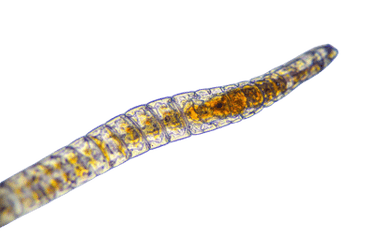
Here is the part that surprises most people: roots.
A major meta-analysis published in Agronomy for Sustainable Development compiled data from dozens of independent studies and found that plants grown with vermicompost developed 57% more root biomass and 78% more shoot biomass than plants grown without it. (DOI: 10.1007/s13593-019-0579-x)
Think about what that means practically. More root mass means better access to water. It means plants anchor more deeply and handle dry spells better. It means everything downstream — the leaves, the flowers, the fruit — is built on a stronger foundation. The same analysis found an average 26% increase in commercial crop yield across multiple crop types. (DOI: 10.1007/s13593-019-0579-x)
Those aren't small numbers. That's a different plant entirely.
What Castings Do for Your Plants
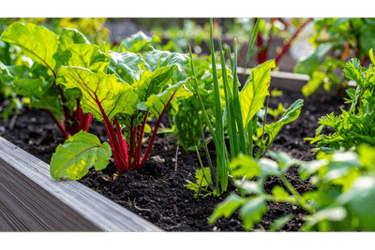
Faster Germination
Seeds sprout faster and more consistently. When seeds are started in a mix that contains worm castings, they germinate more quickly than seeds started in standard mixes.
Researchers at Mississippi State University evaluated worm castings as a germination medium for cucumber seeds in a controlled greenhouse study. They found consistent improvements in both germination rate and early seedling growth compared to standard mixes. Not a little faster. Measurably, reliably faster. (Mississippi State MAFES Research Report 22-6)
Stronger Seedlings
Seedlings come out of the gate stronger. Early growth in castings-amended soil is visibly more vigorous. Stems are sturdier. Leaves are greener. That first critical window between sprouting and transplant — the stage where so many seedlings struggle or fail — is significantly less stressful for the plant when castings are in the mix.
Root Development
This is why we are so excited to produce high-quality castings.
We focus on biology, not volume.
If you are in middle Tennessee, contact us at info@restoringrootsranch.com for information.
Worm castings don't just feed your plants. The microbial community they introduce actively protects them.
Cornell University's Department of Plant Pathology found that beneficial microbes from castings colonize root surfaces and trigger a plant's own immune response — systemic acquired resistance. Cornell's research specifically documented suppression of damping-off disease, and other research has confirmed reductions in root rot, wilt diseases, and common soil-borne fungal problems across multiple crop types.
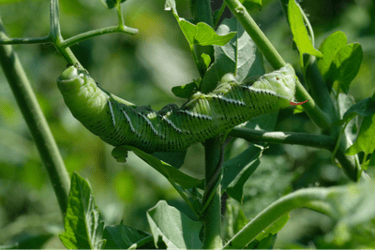
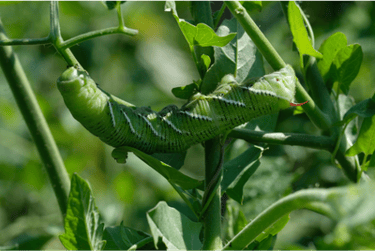
On the pest side, researchers Arancon and Edwards at Ohio State found significantly reduced pressure from aphids, spider mites, mealybugs, cucumber beetles, and tomato hornworms in castings-amended plots. Phenolic compounds in castings are unpleasant to many insects, and healthier plants with stronger immune systems simply take less damage from the pests that do show up.
The experiment that confirmed the mechanism: researchers heat-sterilized worm castings before testing them, leaving the chemistry completely intact. Every protective effect disappeared.
The microbes are the product. We cover this in full in Worm Castings and Plant Disease & Pest Protection
(Source: https://doi.org/10.1078/0031-4056-00251)
The Disease and Pest Story
This is the part that should make every gardener stop and think.
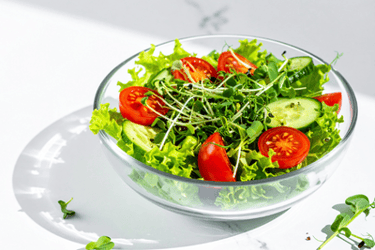
Healthy soil builds healthy plants, and healthy plants produce food with higher nutrient density. We're not just growing more food when we garden with castings. Research suggests we're growing better food.
A greenhouse study examining tomatoes grown with vermicompost versus conventional growing practices found that the vermicompost group produced 32.6% more fruit, and the fruit itself contained 122.6% more vitamin C and 66.1% more soluble protein. Nitrate content in the tomatoes, which is associated with lower nutritional quality, decreased by 65.7%. (https://pubmed.ncbi.nlm.nih.gov/33650364/) More tomatoes, with meaningfully better nutrition in every one.
A published strawberry study tested multiple casting ratios and found that 30% vermicompost produced the biggest increases not just in plant height, fruit yield, and leaf area, but also in free radical scavenging activity in the fruit itself. (DOI: 10.1016/j.scienta.2018.01.023) That's a measure of antioxidant quality. The fruit grown with castings was nutritionally richer than the fruit grown without them.
This makes sense when you consider what the plant is drawing from. A soil with 241% more available nitrogen, 84% more available phosphorus, and an active microbial community that continuously converts organic matter into plant-accessible minerals gives the plant more to work with. More to work with means more to put into the fruit.
The research is confirming what good farmers have observed for generations: the quality of your soil shows up on your plate.
The Food You Grow Is Better Food
"We're not just growing more food. We're growing better food — and the research is finally proving what good farmers have always known."
Unlike synthetic fertilizers, castings release nutrients slowly through that mucus matrix — only when plant roots actively ask for them. This makes them especially forgiving for new gardeners who are still learning how to care for their plants.
Worm Castings Are More Gentle to Plants
God didn't design a complicated system to feed the earth. He designed an elegant one. Earthworms eat, and what they leave behind rebuilds soil in ways laboratories can not replicate. It was working long before we had words like nitrogen cycling or systemic acquired resistance to describe it. We're just finally measuring what He already built.
Worm castings aren't a shortcut or a trendy supplement. They're the foundation of healthy soil done right.
When you add them to your garden, you're not just applying a fertilizer. You're seeding your soil with a living ecosystem that will keep working long after the bag is empty — building structure, feeding beneficial microbes, protecting plants from disease and pests, and producing food that is genuinely better for the people eating it.
That's a lot of good work for something that started as worm poop.
The Bottom Line
If you're in Tennessee, we offer small-batch worm castings locally, with pickup available in the Hickman and Williamson County area.
We focus on quality and biology—because that’s where the real results come from.
Send us a message at info@restoringrootsranch.com to check availability and arrange pickup.
The 241% Nitrogen Number van Groenigen, J.W. et al. (2018). How fertile are earthworm casts? A meta-analysis. Geoderma. Systematic review of all peer-reviewed literature on earthworm cast composition vs. bulk soil. Found +241% mineral nitrogen, +84% available phosphorus, +48% total nitrogen in casts DOI: 10.1016/j.geoderma.2018.11.001
The Research Behind This Article
Root Biomass, Shoot Biomass, and Yield Lazcano, C. et al. (2019). Meta-analysis on vermicompost effects on crop growth and yield. Agronomy for Sustainable Development (Springer Nature). Pooled data from dozens of independent studies. Found +57% root biomass, +78% shoot biomass, +26% commercial crop yield. Maximum benefit at 30–50% by volume. DOI: 10.1007/s13593-019-0579-x
Tomato Vitamin C and Nutritional Quality Greenhouse trial on vermicompost-grown tomatoes vs. conventional. Found +32.6% fruit yield, +122.6% vitamin C, +66.1% soluble protein, −65.7% nitrate content. DOI: 10.13287/j.1001-9332.202102.022
Strawberry Yield and Antioxidant Quality Peer-reviewed study testing six vermicompost ratios in strawberry production. Found 30% castings by volume produced the greatest increases in plant height, leaf area, fruit yield, and free radical scavenging activity (antioxidant quality) of the fruit. DOI: 10.1016/j.scienta.2018.01.023
Seed Germination — Cucumber Hidalgo, P. (1999). Earthworm castings increase germination rate and seedling development of cucumber. Mississippi Agricultural and Forestry Experiment Station (MAFES) Research Report 22-6. Mississippi State University. mafes.msstate.edu/publications/research-reports/rr22-6.pdf
Every claim in this article is backed by peer-reviewed research. Here are the primary sources, with links to the full studies.