Why We Raise Mealworms
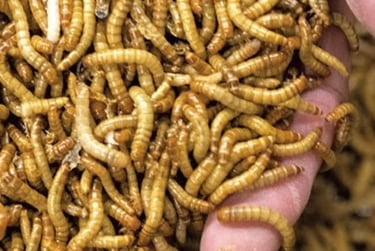
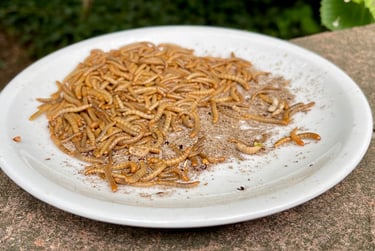
Mealworms turned out to be one of those unexpected additions to the homestead that quietly became indispensable. We started raising them for our chickens, and they've since fed our toad, our axolotl, wild birds at the feeder, and more.
They're excellent fishing bait. They take up almost no space, make no noise, and produce no smell when managed well.
And as it turns out, what they leave behind is just as valuable as the worms themselves.
Container and Substrate
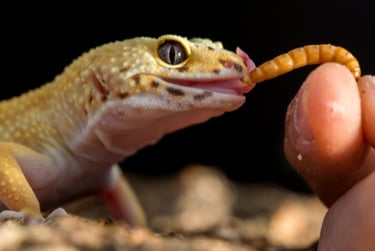
The list of animals that eat mealworms is long. Backyard chickens love them — they're a high-protein treat that supports feather growth and egg production.
Reptiles, amphibians, hedgehogs, sugar gliders, wild songbirds, bluebirds, and small predatory fish are all mealworm consumers. If you keep animals of almost any kind, there's a good chance mealworms have a place in their diet.
The commercial feed industry is paying attention too. Research reviewing mealworm (Tenebrio molitor) as an alternative protein source found them nutritionally comparable to fishmeal and soybean meal, with a high-quality amino acid profile and stable protein content regardless of diet (Choi et al., Animals, 2020, PMC).
Poultry nutritionists have identified mealworms as a strong candidate to replace conventional protein sources in broiler diets, noting that they are easy to breed and require minimal space to produce (Nkosi et al., Tropical Animal Health and Production, 2019, PubMed). The industry hasn't made a full shift yet — cost and scale are still real barriers — but the research direction is clear.
People Eat Them Too
I'll be honest — this part makes my skin crawl a little. But it's true, and it's more mainstream than most people realize.
Mealworms have been eaten by humans across Asia, Latin America, and parts of Africa for generations. The European Union officially approved dried yellow mealworm as a novel food in 2021, making it the first insect legally authorized for human consumption in the EU.
Here in the United States, mealworm-based protein powders, snack bars, and flour are available and growing in popularity among people looking for sustainable protein sources.
I'm not personally interested, but the science behind it is solid. If you're curious, it's worth a search.
The Byproduct that Few Understand
The part of mealworm farming that doesn't get nearly enough attention is the frass.
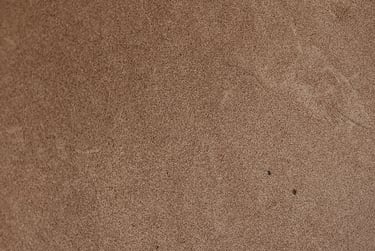
Frass is the combination of mealworm castings, shed skins, and residual substrate that accumulates in your bin. Most people think of it as waste. It isn't. We use it in our own garden, and the research backs up why.
A two-year USDA field study found that yellow mealworm frass increased soil carbon by two times and nitrogen by three times compared to poultry litter and ammonium nitrate, while producing crop yields similar to those achieved with conventional fertilizers (Ashworth et al., Scientific Reports, 2025, USDA ARS).
A peer-reviewed study published in Scientific Reports found that mealworm frass was as effective as mineral NPK fertilizer at improving biomass and nutrient uptake in barley, due to its rapid mineralization and readily available nutrient content (Houben et al., Scientific Reports, 2020, PMC).
What makes frass particularly interesting is how gently it works. Unlike synthetic fertilizers that deliver a sharp nutrient spike, frass releases nutrients progressively as it breaks down, feeding soil biology rather than bypassing it.
Researchers have also found that frass boosts soil microbial biomass and introduces beneficial microbes that promote plant growth (ScienceDirect, 2024). The chitin from shed skins has been studied for its role in stimulating plant immune responses.
This is an emerging area of research, and the science is still catching up with what small-scale growers have suspected for years. We're paying attention to it.
Why We Raise Them
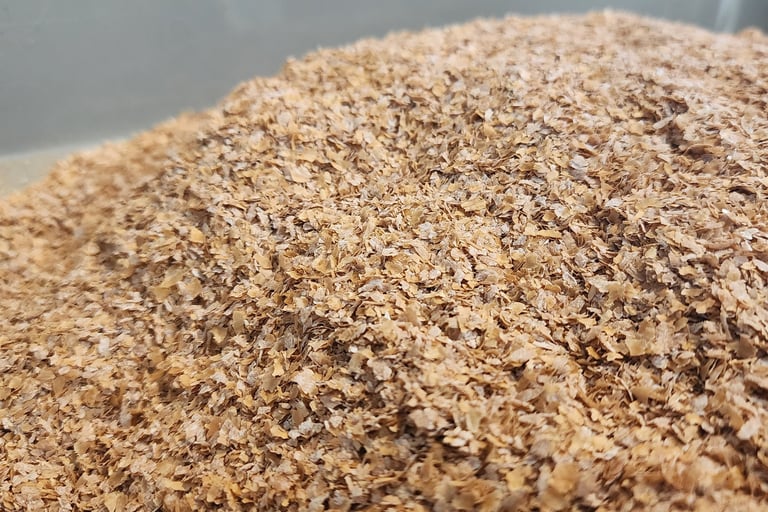
We raise mealworms because they fit the way we farm. They convert simple inputs — wheat bran and a few vegetable scraps — into a high-protein food source, and what's left behind improves our soil. Nothing is wasted. That's the whole point.
If you're raising chickens, keeping backyard birds, fishing, or just looking for a low-effort way to close a loop on your organic inputs, mealworms are worth your time. The learning curve is short, the startup cost is low, and the returns are real.
We sell mealworms locally and can ship with buyer-paid shipping. We also carry heat-treated wheat bran in 1 and 5-pound bags. For local buyers, we're happy to provide gut-loaded mealworms if that's your preference — fed with our own calcium-dense recipe before pickup. Just give us 72 hours.
Ready to get started? See How to Raise Mealworms at Home for everything you need to set up your first bin. Or skip ahead to our Mealworm Life Cycle Guide if you want to understand what's happening at every stage.